
Projects
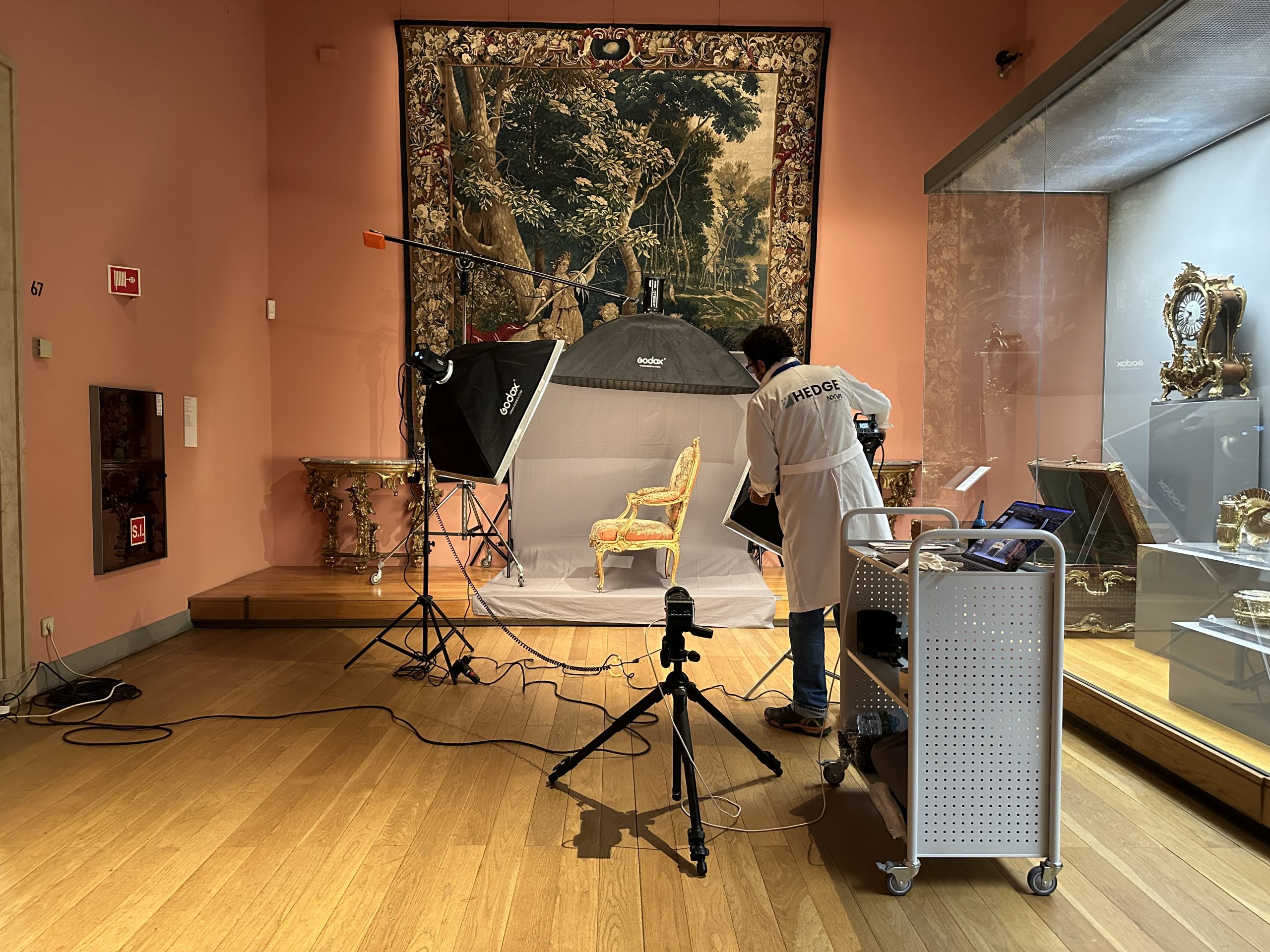
The HEDGE Project explores how advanced digital technologies can transform the way we experience culture. Each project on this page showcases immersive visual visits in national museums, created using tools such as 3D acquisition and modeling, high-resolution photography, and virtual and augmented reality.
By combining innovation with heritage, these projects offer new ways to access, understand, and engage with Europe’s rich cultural history—whether on-site or remotely.

A masterpiece of Portuguese architecture, the Royal Monastery of Santa Maria of Belém, commonly known as the Jerónimos Monastery because it was intended for the Order of Saint Jerome, has been classified as a National Monument since 1907 and was inscribed on the UNESCO World Heritage List in 1983.
The church, which holds religious services and has visiting hours for heritage tours, and the cloister, secularized in the 19th century, form the most visited heritage site in the country.

The National Museum of Costume houses a collection of clothing and accessories from the 18th century to the present day, representing various historical periods, styles, and trends.
It is located in the Angeja-Palmela Palace, a former leisure estate in Lisbon, and is adjacent to the Monteiro-Mor Botanical Park, created in the 18th century and designed by the Italian Domenico Vandelli.

Located in the historic area of Santa Clara, it occupies the building originally intended to be the Church of Santa Engrácia and houses the tombs of prominent figures in Portuguese history, such as Luís Vaz de Camões, Sidónio Pais, Almeida Garrett, Humberto Delgado, Sophia de Mello Breyner Andresen, Amália Rodrigues, and Eusébio da Silva Ferreira.

Dr. Anastácio Gonçalves
House-Museum
The Dr. Anastácio Gonçalves House-Museum is a museum space in the city of Lisbon showcasing the collection gathered by the physician and collector António Anastácio Gonçalves.
The group of about 3,000 works of art comprises three major groups: Portuguese painting from the 19th and 20th centuries, Chinese porcelain, and Portuguese and foreign furniture.

The monumental complex of the Monastery of Alcobaça is one of the most remarkable and best-preserved examples of Cistercian architecture and spatial philosophy.
Alcobaça was the last foundation established during the lifetime of Saint Bernard and the first fully Gothic monument in the country. The abbey was founded in 1153, through a donation by King Afonso Henriques to Saint Bernard of Clairvaux.

The National Museum of Music holds one of the richest European collections of musical instruments from the 16th to the 21st century, representing a wide range of musical practices, with some pieces classified as “national treasures.”
Operating since 1994 at the Alto dos Moinhos metro station in Lisbon, the museum closed to the public on October 1, 2023, marking the beginning of its relocation to the north wing of the Royal Building of Mafra. The new space, scheduled to open in 2025.

Machado de Castro National Museum
The Machado de Castro National Museum is one of the most important museums in Portugal. It was named in honour of the prominent Coimbra sculptor Machado de Castro (1731-1822). It opened to the public in 1913 and its first director was António Augusto Gonçalves (1913-28). In 1965, the State included it in the list of National Museums, acknowledging its exceptional quality.

National Museum of Ancient Art
Founded in 1884 and housed for nearly 140 years in the Alvor Palace, the National Museum of Ancient Art has borne its current name for over a century. It holds the most important public collection in Portugal, encompassing painting, sculpture, goldsmithing, and decorative arts from Europe, Africa, and the East.